What Are Stainless Steel Compression Fittings?
Stainless steel compression fittings are mechanical connectors designed to join tubing to other tubes, pipes, valves, or equipment. They typically consist of a fitting body, a compression nut, and one or more ferrules. When the nut is tightened, the ferrule is compressed around the tube, creating a strong connection. Unlike welded connections, compression fittings can often be installed without the need for specialized welding equipment. Consequently, they become a practical choice for industrial systems that require efficient assembly, maintenance, or the replacement of components. The precise performance of a fitting depends on its material grade, dimensions, pressure rating, temperature limits, and its compatibility with the fluid being handled.Benefits of Stainless Steel Compression Tube Fittings
Choosing the right stainless steel compression tube fittings can improve the reliability and maintenance of an industrial system. Some important benefits include:1. Corrosion Resistance
Stainless steel is capable of resisting corrosion and oxidation in a wide range of working environments. For this reason, it is well-suited for applications involving exposure to moisture, certain chemicals, and demanding industrial conditions. One should always select the appropriate grade of stainless steel based on the specific working environment.2. Secure Tube Connections
When the fittings, tubing, and installation method are compatible, properly installed compression fittings provide reliable connections. To minimize the risk of leakage, it is essential to prepare the tube correctly and tighten the fitting properly.3. Convenient Installation
Compression fittings can simplify installation, as they generally do not require welding of the tubing. They are particularly useful in instrumentation systems, equipment assembly, and areas where access for installation is limited.4. Long-Term Durability
Stainless steel fittings are known for their strength and durability. If selected correctly and maintained properly, they can provide long-lasting service even in demanding industrial applications.5. Versatile Applications
These fittings are available in various sizes, configurations, and connection styles, allowing engineers and maintenance teams to select the necessary components for a wide range of tubing systems.Common Types of Steel Tube Compression Fittings
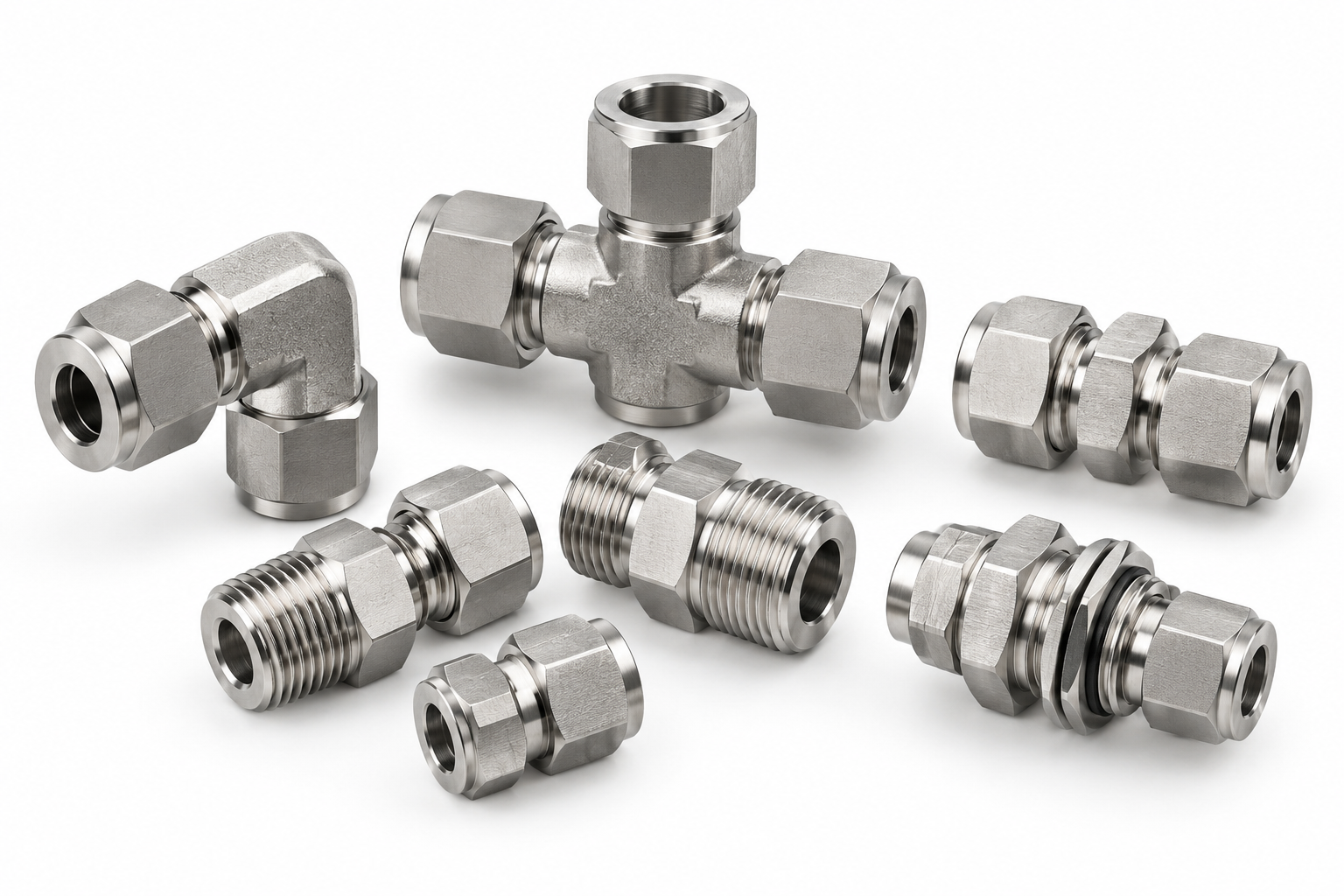
Steel tube compression fittings are available in various designs to meet different connection requirements. Common options include:-
Straight connectors: Join two compatible tube sections in a straight line.
-
Elbow fittings: Change the direction of tubing, commonly at 45 or 90 degrees.
-
Tee fittings: Divide or combine flow between three connection points.
-
Bulkhead fittings: Allow tubing to pass through a panel or enclosure while maintaining a secure connection.
-
Reducers: Connect compatible tubing with different outside diameters.
-
Male and female adapters: Connect tubing to threaded ports or other compatible components.
Applications of Compression Fitting Stainless Steel Products
A compression fitting stainless steel design can be useful across multiple industries where dependable tubing connections are necessary. Chemical processing: Depending on chemical compatibility and operational conditions, appropriate fittings can be used in chemical transfer and process instrumentation systems. Oil and gas: When the specifications of compression fittings meet the required pressure and safety standards, they can support instrumentation tubing and other compatible auxiliary systems. Manufacturing: In industrial machinery, production equipment, and automated systems, stainless steel fittings can be used to connect tubing and control the movement of fluids. Food and beverage processing: Stainless steel components can be used in suitable processing equipment. However, it is essential to consider factors such as hygienic design, surface finish, material certification, and sanitary requirements. Laboratories and instrumentation: Precise tubing connections are critical in analytical instruments, measurement systems, and process monitoring applications.How to Choose Stainless Steel Pipe Compression Fittings?
Selecting the right stainless steel pipe compression fittings starts with understanding the requirements of the installation. First, verify the tube’s outer diameter and wall thickness. A fitting designed for a specific tube size or material may not be suitable for a different tube. Next, determine the appropriate grade of stainless steel (such as 304 or 316) based on the risk of corrosion and the specific operational requirements. Pressure and temperature ratings are equally important. Ensure that the entire assembly can operate safely under the expected conditions—including pressure fluctuations and temperature variations. You should also check thread compatibility, ferrule design, and the manufacturer’s installation instructions. Mixing components from different fitting systems without verifying compatibility can negatively affect the performance of the connection. For critical tasks, consult a qualified engineer before installation and check the applicable industry standards.Why Choose Portage Specialty?
Established in 1976, Portage Specialty serves the industrial market as a manufacturer and distributor. Businesses in need of stainless steel compression fittings can contact the company to discuss their specific requirements—such as the type of fitting, tube dimensions, material specifications, and the intended application. Whether you require stainless steel compression tube fittings for instrumentation, manufacturing, or other industrial systems, selecting the right product is essential for reliable performance. Contact Portage Specialty to discuss your application and identify suitable fitting options for your project.Frequently Asked Questions
You can contact Portage Specialty, a manufacturer and distributor established in 1976, to discuss your stainless steel compression fitting requirements. Call (800) 323-3864 or email portagespecialty@att.net.
Choose fittings based on tube outside diameter, material grade, pressure rating, temperature range, connection type, and application requirements. Confirm compatibility before ordering.
Available sizes depend on the product range. Confirm the required tube outside diameter and connection dimensions with the supplier to identify a compatible fitting.
Pricing depends on fitting type, size, stainless steel grade, quantity, and specifications. Contact Portage Specialty at (800) 323-3864 for pricing inquiries.
Check the fitting dimensions, stainless steel grade, connection style, operating pressure, temperature range, quantity, and intended application to ensure the product meets your requirements.
Portage Specialty operates as a manufacturer and distributor and has been established since 1976. Contact the company to discuss product availability and industrial purchasing requirements.
Call (800) 323-3864 or email portagespecialty@att.net with your required fitting type, dimensions, material grade, and quantity to discuss your requirements.